Bernardo Zenale e aiuti
Treviglio, documentato dal 1477-Milano, 1526
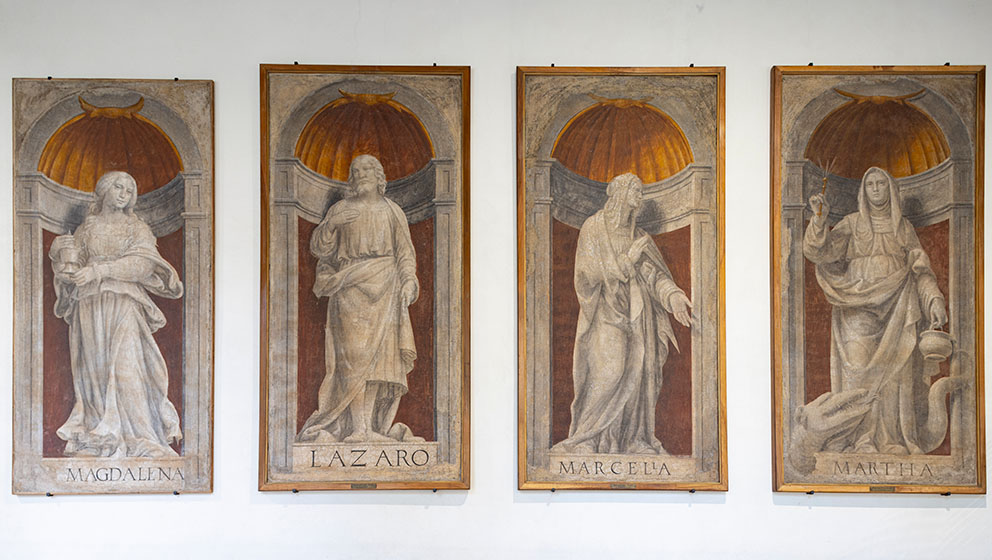
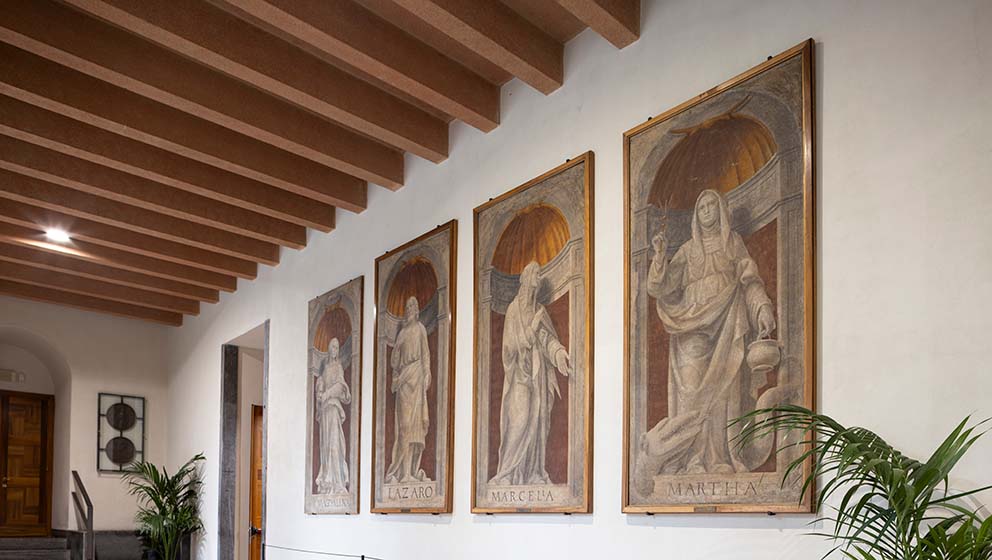
Santa Maria Maddalena, San Lazzaro Santa Marcella, Santa Marta
1520-1525 circa
Affreschi trasportati su tela
Provenienza: Milano, chiesa di S. Marta
In deposito dalla Pinacoteca di Brera
Gli affreschi provengono dal monastero agostiniano femminile di S. Marta (già in piazza Mentana), distrutto a inizio Ottocento, a eccezione della cripta cinquecentesca (altri dipinti della medesima provenienza si possono vedere in Sala Professori e in Aula G 110). Negli anni della dominazione francese sul ducato di Milano (1499-1521), il monastero di S. Marta divenne un importante polo religioso, guidato dalla mistica figura della priora Arcangela Panigarola. Qui fu sepolto Gaston de Foix, duca di Nemours e nipote di re Luigi XII di Francia, in un monumento marmoreo realizzato da Agostino Busti detto il Bambaia, oggi smembrato e in gran parte conservato tra il Castello Sforzesco e la Pinacoteca Ambrosana.
Non è noto da quale ambiente provengano i quattro strappi, che ritraggono in monocromo, entro nicchie dal sapore classico, Santa Marta, dedicataria del cenobio, accanto ai Santi Maddalena e Lazzaro, considerati suoi fratelli, e a Santa Marcella, nobile romana che tra le prime sviluppò i principi del monachesimo occidentale.
Non c’è ancora unanimità in merito all’autore dei dipinti: accanto a dolcezze tipiche della pittura di Bernardino Luini, essi presentano infatti molti punti in comune con la tarda maniera di Bernardo Zenale, artista legato da molti fili al più giovane Luini, tanto da lasciare ipotizzare, in diversi casi, forme di collaborazione tra i due artisti e le loro botteghe.
English
Bernardo Zenale and assistants
Treviglio, documented from 1477 – Milan, 1526
St. Mary Magdalene, St. Lazarus, St. Marcella, St. Martha
c. 1520–1525
Frescoes transferred to canvas
Provenance: Milan, Church of Santa Marta
On loan from the Pinacoteca di Brera
The frescoes come from the Augustinian convent of Santa Marta (formerly in Piazza Mentana), which was destroyed in the early 19th century, with the exception of the 16th-century crypt (other paintings from the same source can be seen in the Lecturers’ Room and in Room G 110). During the years of French rule over the Duchy of Milan (1499–1521), the monastery of Santa Marta became an important religious centre, led by the mystical figure of the prioress Arcangela Panigarola. Gaston de Foix, Duke of Nemours and nephew of King Louis XII of France, was buried here in a marble monument created by Agostino Busti, known as il Bambaia. The monument, now dismantled, is largely preserved between the Castello Sforzesco and the Pinacoteca Ambrosiana.
The four detached frescoes depict Saint Martha, to whom the convent is dedicated, alongside Saints Mary Magdalene and Lazarus, considered her siblings, and Saint Marcella, a Roman noblewoman who was among the first to develop the principles of Western monasticism. The setting from which they originate is unknown.
There is still no consensus regarding the author of the paintings: alongside the softness typical of Bernardino Luini’s work, they share many features with the late style of Bernardo Zenale, an artist closely linked to the younger Luini, to the extent that, in several instances, forms of collaboration between the two artists and their workshops have been hypothesised.